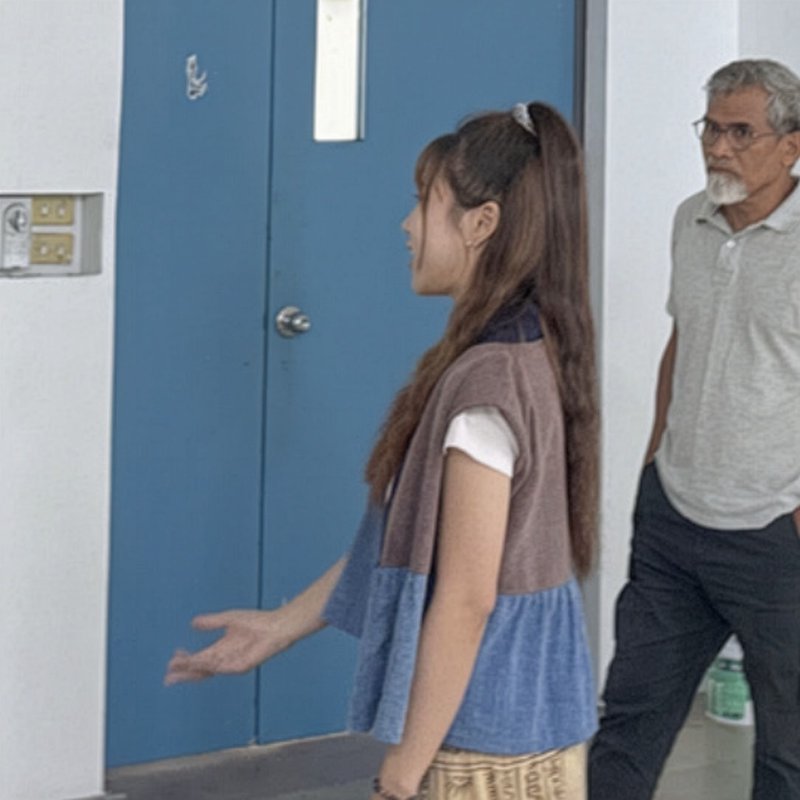
About Timpimook Purivisit#
My work emerges from imagination and observations of the natural world around me. I use mixed media to create pieces that reflect the relationship between humans and nature.
Origins and Inspiration#
My childhood wasn’t particularly bright, which led me to dream of a home filled with vibrant colors. This dream became the inspiration for me to create work full of color and fantasy.
Observing nature around me—such as leaves falling onto grass—reminds me of the impermanence of all things. Nature is constantly changing, and this decay is part of life’s cycle.
Approach#
Creating with Mixed Media#
I work with mixed media, combining natural materials with materials derived from modern technology. This blending is like the evolution of nature in which humans play an active role.
In an era where technology is advancing rapidly, I’m interested in exploring how technology and human activity impact the ways of nature. My work invites viewers to contemplate the direction of nature’s transformation as it’s accelerated or altered by human hands.
Working Process#
I let nature serve as a guide. I begin by seeking out interesting natural materials, then arrange and assemble them into works following my imagination.
The study of space and the meaning of materials is central to my work. I want to express stillness and tranquility, while reflecting impermanence and emptiness—influenced by Buddhist philosophy.
Philosophy#
Art is part of a communication process that stimulates people’s consciousness. My work reflects the complex relationship between humans and the natural world.
I focus on presenting work that expresses vibrancy and fantasy through mixed media techniques, reflecting the joy of creation. At the same time, it serves as a reminder of life’s transience and the ongoing changes that occur continuously.
Artistic Influences#
Raku Inoue#
I’ve been inspired by Raku Inoue , who lets nature serve as a guide in creating his work. He seeks out interesting natural materials and arranges them into images following his imagination. This approach aligns with my working method.
Sanitas Praditasani#
The work of Sanitas Praditasani, which emphasizes the study of space and the meaning of materials, expresses stillness and tranquility while reflecting impermanence—influenced by Buddhist philosophy. This has been an important inspiration for my work.